
Industrial
A PV system under the net-billing scheme applies at any kind
of industrial premises including hotels, supermarkets and
factories. Harnessing solar power can lower the environmental
footprint, increase the energy efficiency and increase the
financial yield of your business.
- Step 1: The required licenses are secured.
- Step 2: EAC connection terms are secured and payed.
- Step 3: The agreed Photovoltaic (PV) System is installed as designed.
- Step 4: The Photovoltaic system is inspected by EAC.
- Step 5: CERA operation permit.
- Step 6: Purchasing agreement with EAC is signed.
- Step 7: Connection of the system to the EAC electricity grid.
- Step 8: The premises use the electricity generated to cover their electricity needs. In the occasion of energy deficits the customer pays to the EAC for the used electricity. In the case of higher energy yield from the photovoltaic system the excess electricity is channelized in the electricity network. The generator receives credit equal to the EAC cost of avoidance calculated by CERA for each unit of electricity fed to the EAC grid.
Solar energy increases the energy efficiency of your building that leads to high financial returns on your investment. The generator is being paid for the excess energy provides to the EAC grid.
Lowers the environmental carbon footprint of your industrial premises and prevents the atmospheric pollution that results from conventional energy sources. Enables the industry/business to comply with the national laws and regulations relevant to greenhouse gas emissions.
- A statement of the electricity consumption of your premises of the past year (provided by the customer service of the EAC)
- A bill from EAC with the applicant’s name, for the property of installation.
- EAC application for net-billing
- A consent form from the co-owner of the building that allows the photovoltaic system installation
- A copy of the building’s topographical plot and rooftop view
- Building permit of the building (by the respective Local Building Authority)
- Cyprus Regulatory Authority License
- Building Permit
- Building License
- City Planning Permit
Solar Photovoltaic System Capacity
Solar PV Annual energy generation < annual consumption of the premises
Max solar PV system capacity < 80% of the installed power capacity of the premises
Case Studies
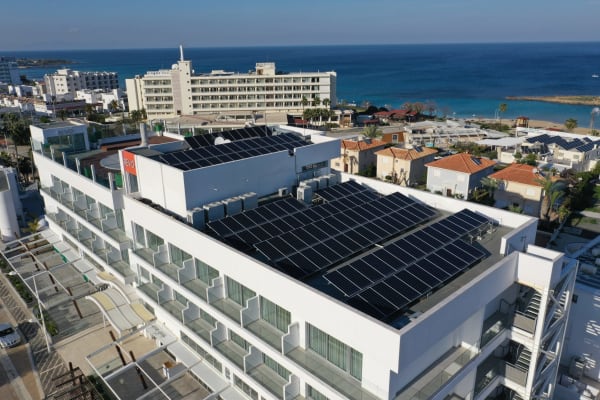
Hotel | 40 kWp
Famagusta
- PV modules: 122
- Area coverage: 236.68 m2
- Annual energy yield: 68,000 kWh
- Payback time: 3.2 years
- Warranty: 25 years
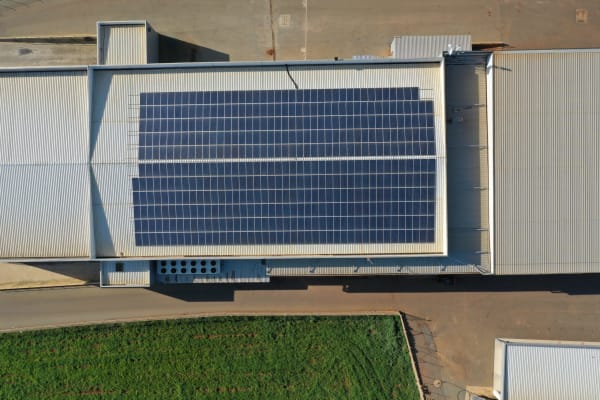
Agriculture | 160 kWp
Xylofagou
- PV modules: 500
- Area coverage: 920 m2
- Annual energy yield: 279,849 kWh
- Payback time: 3.6 years
- Warranty: 25 years

Supply-chain | 180 kWp
Famagusta
- PV modules: 310 (Bifacial)
- Area coverage: 682 m2
- Annual energy yield: 315,000 kWh
- Payback time: 3 years
- Warranty: 30 years

Manufacture | 300 kWp
Larnaca
- PV modules: 900
- Area coverage: 1,776.7 m2
- Annual energy yield: 612,000 kWh
- Payback time: 3.3 years
- Warranty: 25 years